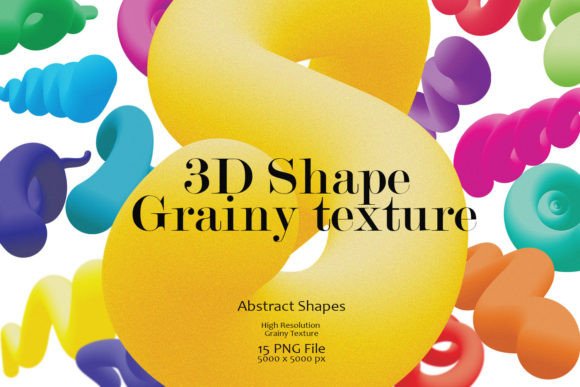
15 Variations 3D Shape Grainy Texture
In the evolving landscape of digital design, the demand for tactile, organic elements has never been higher. Designers and creators are moving away from flat, sterile aesthetics toward visuals that possess depth, character, and a sense of physical reality. This shift is driven by the need to create emotional connections with audiences through visual storytelling. Enter the 15 Variations 3D Shape Grainy Texture, a comprehensive asset pack designed to bridge the gap between abstract digital art and tangible, textured realism. These assets are not merely decorative; they are foundational building blocks for modern graphic design, offering versatility across print, web, and social media projects.
The core of this collection lies in its ability to provide high-fidelity detail without the complexity of creating such textures from scratch. Each file represents a unique interpretation of three-dimensional form combined with a grainy, tactile surface. Whether you are a seasoned professional looking to add a final layer of polish to a brand identity or a hobbyist seeking to elevate a personal project, understanding the utility and application of these assets is crucial. This guide explores the technical specifications, creative applications, and strategic advantages of incorporating these 3D scribble PNGs into your workflow.
Understanding the Asset: What Are 3D Scribble Textures?
To fully appreciate the value of the 15 Variations 3D Shape Grainy Texture, it is helpful to understand what constitutes a "scribble" in a 3D context. Unlike traditional vector lines which are mathematically precise and often rigid, a 3D scribble mimics the natural imperfections of hand-drawn motion. It suggests energy, spontaneity, and human touch. When rendered in three dimensions, these shapes gain volume, casting subtle shadows and reflecting light in ways that ground them in a virtual space.
The "grainy texture" aspect adds another layer of sophistication. In digital design, noise or grain is often used to prevent color banding and to simulate the look of film, paper, or rough materials. By applying a grainy texture to smooth 3D forms, designers introduce a sense of age, grit, or raw materiality. This combination creates a visual tension between the smoothness of the digital render and the roughness of the texture, resulting in an image that feels both modern and timeless.
The pack includes 15 unique PNG files, each featuring a transparent background. This transparency is critical for integration. It allows designers to overlay these shapes onto any background—whether it is a solid color, a complex photograph, or a gradient—without worrying about awkward white boxes or mismatched edges. The black and white color scheme ensures maximum flexibility, allowing the shapes to act as either bold focal points or subtle textural overlays depending on how they are blended within a composition.
Technical Specifications and Quality Standards
One of the most significant considerations for any designer is the quality of the source material. Low-resolution assets can ruin even the most carefully planned layout, leading to pixelation when scaled up. The 15 Variations 3D Shape Grainy Texture addresses this concern head-on with industry-leading specifications.
- Resolution: Each file is provided at 5000 x 5000 pixels. This massive resolution ensures that the images remain crisp and clear even when printed on large-format materials such as billboards, banners, or high-end packaging.
- DPI (Dots Per Inch): All files are set to 300 DPI, which is the gold standard for professional printing. This guarantees that the grainy details and 3D contours will be reproduced accurately on physical media, preserving the intended aesthetic.
- Format: The primary format is PNG, chosen for its lossless compression and support for alpha channels (transparency). Additionally, the pack includes 1 AI file, providing vector-based scalability for those who need to modify the underlying paths or adjust gradients before exporting.
The inclusion of the AI file is particularly noteworthy. While PNGs are excellent for immediate use, having access to the Adobe Illustrator source file allows for deeper customization. Users can change gradient colors as they wish, alter the stroke weights, or combine elements to create new variations. This dual-format approach caters to both quick-efficiency needs and deep-customization requirements.
Creative Applications and Use Cases
The versatility of the 15 Variations 3D Shape Grainy Texture makes it suitable for a wide array of industries and project types. Below are several practical scenarios where these assets can add significant value.
Social Media and Digital Marketing
In the crowded space of social media, stopping the scroll is paramount. Abstract 3D elements draw the eye due to their unusual geometry and textural contrast. Brands can use these scribbles as background accents for Instagram stories, Facebook cover photos, or YouTube thumbnails. The grainy texture adds a layer of sophistication that distinguishes a brand from competitors using flat, generic stock imagery. For instance, a music festival poster might use a chaotic 3D scribble to convey energy and movement, while a tech startup might use a cleaner, more structured variation to suggest innovation.
Print Design and Editorial
When designing magazines, brochures, or book covers, texture plays a vital role in perceived quality. The 300 DPI resolution of these PNGs ensures they print beautifully on matte, glossy, or textured paper stocks. A fashion magazine might overlay one of the black-and-white scribbles onto a monochrome photograph to create a collage effect, adding depth and visual interest without distracting from the main subject. Similarly, business cards can feature a subtle, embossed-style 3D shape to give recipients a tactile experience that reinforces brand recall.
Web Design and UI Elements
Modern web design trends favor immersive experiences. Parallax scrolling effects often utilize layered graphical elements to create depth. The transparent PNGs of the 15 Variations 3D Shape Grainy Texture can be used as floating elements in a hero section, responding to mouse movements to create an interactive feel. Furthermore, these textures can serve as dividers between content sections, breaking up long stretches of text with visually engaging breaks that maintain user engagement.
Product Packaging and Branding
For consumer goods, packaging is the first point of contact with the customer. A unique, textured visual identity can make a product stand out on a shelf. The grainy 3D shapes can be integrated into logo designs, label patterns, or box interiors. Because the files are high-resolution, they can be scaled to fit various package sizes without losing detail. The black and white palette offers a minimalist elegance that pairs well with luxury brands, while also being adaptable to more playful, colorful palettes when placed over vibrant backgrounds.
Evaluating Suitability for Your Project
While the 15 Variations 3D Shape Grainy Texture is a powerful tool, it is important to use it strategically. Overuse of textured elements can lead to visual clutter, so restraint is key. Here are some guidelines for evaluating whether these assets are right for your specific needs.
- Define the Mood: Does your project require a sense of grit, nostalgia, or raw creativity? If yes, the grainy texture is an excellent choice. If the goal is ultra-clean, corporate minimalism, these textures might be too distracting.
- Consider the Background: Since the shapes are black and white, they work best against backgrounds that provide sufficient contrast. Light backgrounds may require the black shapes, while dark backgrounds may benefit from the white ones. Experiment with blending modes like "Multiply" or "Screen" in your design software to achieve seamless integration.
- Balance Complexity: If your design already features busy typography or complex photographic elements, use the 3D scribbles sparingly as accent pieces rather than dominant features. Let them enhance the composition rather than compete with it.
- Leverage the AI File: If you find that the default black and white colors do not fit your brand palette, utilize the included AI file to generate custom gradients. This allows you to maintain the structural integrity of the 3D shape while aligning it with your specific color branding.
Strengths and Limitations
No design asset is perfect, and understanding the limitations is part of professional practice. The primary strength of this pack is its high resolution and versatility. The 5000x5000px size ensures longevity; as display technologies improve, these assets will remain usable for years to come. The transparent background eliminates the need for tedious masking processes, saving time in the production pipeline.
However, there are considerations regarding file management. High-resolution PNGs can be large in file size, which may impact loading times if used excessively on websites. It is advisable to optimize these images for web delivery (e.g., using WebP format or compressing PNGs) when deploying them online, while retaining the original high-res versions for print work. Additionally, because the textures are pre-rendered, they lack the infinite scalability of pure vectors (except for the single AI file provided). If you need to stretch a scribble across an entire billboard, ensure you are using the original high-res PNG or converting it appropriately to avoid pixelation.
Conclusion
The 15 Variations 3D Shape Grainy Texture represents a thoughtful convergence of artistic expression and technical precision. By offering 15 unique, high-resolution options with transparent backgrounds, it empowers designers to inject personality and depth into their work. Whether used to create striking social media graphics, sophisticated print layouts, or immersive web experiences, these assets provide a reliable foundation for creative exploration.
For creators seeking to move beyond flat design and embrace the tactile richness of 3D textures, this pack offers a practical, high-quality solution. With the added benefit of an editable AI file, users are not limited to static images but can actively shape the assets to fit their evolving needs. In a digital world saturated with content, the ability to create visuals that feel real, textured, and dynamic is a significant advantage. Incorporating these 3D scribbles into your design toolkit is a step toward creating work that resonates, engages, and endures.
As you explore these variations, remember that the best designs often come from experimentation. Try combining different scribbles, altering their opacity, or integrating them with other typographic elements. The possibilities are limited only by your imagination. With tools like the 15 Variations 3D Shape Grainy Texture readily available, the barrier to creating professional-grade, textured visuals has never been lower.